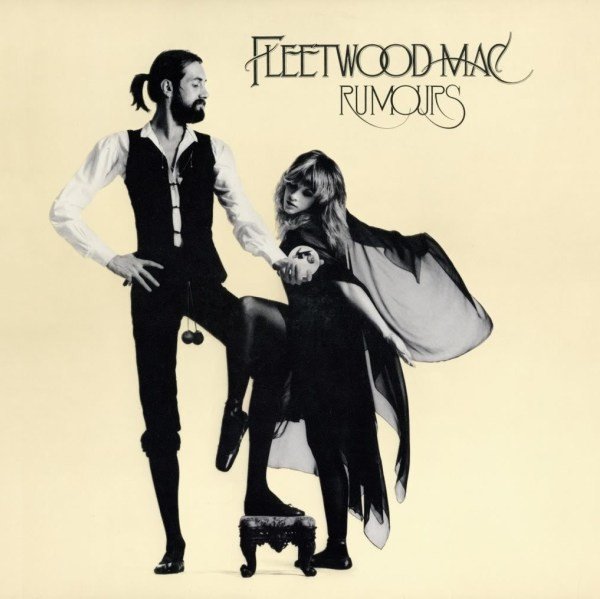
Rumours — Fleetwood Mac
Rumours
Fleetwood Mac
Febbraio 1977. Il punk sta già sfasciando i teatri londinesi, le major tremano, e dal Village Recorder di Los Angeles esce un disco che non ha niente in comune con la rabbia del momento. Rumours è un disco di rotture sentimentali: i McVie hanno appena divorziato, Buckingham e Nicks hanno appena smesso di stare insieme, e tutti e cinque continuano a suonare insieme. Il disco precedente, Fleetwood Mac (1975, Reprise MS2281), aveva già dimostrato che la versione californiana della band poteva costruire un pop-rock di precisione svizzera senza perdere calore. Rumours porta quella formula fino al limite: undici brani, quarantadue minuti, nessuna traccia che non sia al proprio posto.
La produzione di Ken Caillat e Richard Dashut è una delle più lucide di quel decennio — non nel senso di fredda, ma nel senso di trasparente. Go Your Own Way di Buckingham apre il lato B con una chitarra ritmica sincopata e un basso di John McVie grasso come argilla rossa; la rabbia è nella struttura, non urlata. The Chain è il momento più strano e più necessario del disco: un riff di basso così brutale da sembrare sbagliato per quindici secondi, finché non si capisce che è il centro di gravità dell'intero album — l'unico brano scritto da tutti e cinque insieme. Gold Dust Woman chiude il lato B su tre accordi ripetuti fino all'ossessione: Stevie Nicks canta come se stesse recitando un esorcismo.
Il pressing originale Warner Bros. USA (BSK 3010, 1977) ha una presenza nei medi avvolgente ma risente spesso dell'usura degli stamper già deteriorati al momento dell'uscita — un problema ben documentato dalla comunità audiofila. La prima pressa UK (K56344, Warner Bros.) è generalmente considerata superiore per equilibrio timbrico, con un soundstage più arioso e meno compressione. Il riferimento moderno assoluto è la doppia 45RPM Hoffman/Gray, masterizzata dai nastri analogici originali: i transienti della batteria di Mick Fleetwood hanno una materialità fisica che le versioni standard non replicano.
Rumours ha venduto oltre 40 milioni di copie — un numero che dovrebbe insospettire, e invece non insospettisce. Non perché la massa abbia ragione, ma perché i meccanismi che rendono questo disco popolare sono esattamente gli stessi che lo rendono grande: melodie che non lasciano scampo, arrangiamenti così calibrati da sembrare naturali, e una tensione emotiva che filtra attraverso ogni singola nota.
February 1977. Punk is already tearing apart London's theatres, the majors are trembling, and out of the Village Recorder in Los Angeles comes a record that has nothing in common with the rage of the moment. Rumours is a record of romantic collapse: the McVies have just divorced, Buckingham and Nicks have just ended their relationship, and all five continue to play together. The previous album, Fleetwood Mac (1975, Reprise MS2281), had already proved that the California version of the band could build pop-rock of Swiss precision without losing warmth. Rumours takes that formula to its limit: eleven tracks, forty-two minutes, not a single one out of place.
The production by Ken Caillat and Richard Dashut is one of the most lucid of that decade — not cold, but transparent. Buckingham's Go Your Own Way opens Side B with a syncopated rhythm guitar and a John McVie bass line thick as red clay; the rage is structural, not screamed. The Chain is the strangest and most necessary moment on the record: a bass riff so brutal it sounds wrong for fifteen seconds, until you understand it's the album's centre of gravity — the only track written by all five together. Gold Dust Woman closes Side B on three chords repeated to obsession: Stevie Nicks sings like she's performing an exorcism.
The original Warner Bros. USA pressing (BSK 3010, 1977) has an enveloping midrange presence but frequently suffers from stamper wear already deteriorated at the time of release. The first UK pressing (K56344, Warner Bros.) is generally considered superior for timbral balance, with a more spacious soundstage and less compression. The modern absolute reference is the Hoffman/Gray double 45RPM set, mastered from the original analogue tapes: the transients in Mick Fleetwood's drums carry a physical presence that standard versions cannot replicate.
Rumours has sold over 40 million copies — a number that ought to provoke suspicion, and somehow doesn't. Not because the masses are right, but because the mechanisms that make this record popular are exactly the ones that make it great.
Non il rock più selvaggio né il più audace — ma forse il più costruito con cura millimetrica. Un disco che non si esaurisce perché ha troppe stanze da esplorare. Not the wildest rock nor the most daring — but perhaps the most carefully crafted to the millimetre. A record that never exhausts itself because it has too many rooms to explore.
Guida al Pressing Pressing Guide
Warner Bros. BSK 3010 (1977). Stamper deteriorati — difficile trovare copie in buone condizioni
K56344, Warner Bros. Soundstage più arioso, meno compressione — la scelta migliore tra le presse d'epoca
Doppio 45RPM dai nastri originali. Il riferimento assoluto moderno
Warner Bros. standard. Onesta e ben distribuita per uso quotidiano
Warner Bros. BSK 3010 (1977). Deteriorated stampers — hard to find clean copies
K56344, Warner Bros. More spacious soundstage, less compression — the best period pressing
Double 45RPM from original tapes. The modern absolute reference
Standard Warner Bros. Honest and widely available for daily listening
Link affiliati — acquistando tramite questi link supporti Groov-illa senza costi aggiuntivi. Affiliate links — buying through these links supports Groov-illa at no extra cost to you.
FAQ
Qual è il pressing di Rumours da comprare nel 2026?
Per il massimo assoluto, la doppia 45RPM Hoffman/Gray è il riferimento. Per uso quotidiano, la ristampa standard Warner Bros. 180g è onesta. L'originale USA (BSK 3010) è difficile da trovare in buone condizioni — meglio la prima pressa UK (K56344).
Perché il pressing originale USA di Rumours è considerato problematico?
La tiratura fu enorme e gli stamper si deteriorarono rapidamente. Molte copie presentano rumore di fondo, compressione dinamica nei passaggi intensi e una Gold Dust Woman con il finale appiattito. La prima pressa UK evita questi problemi.
Qual è il brano più rappresentativo di Rumours?
The Chain è il centro di gravità: l'unico scritto da tutti e cinque, l'unico che svela la tensione autentica del disco sotto la superficie levigata. Su un buon pressing, il riff di basso finale ha una fisicità che fa capire tutto il resto.
Which pressing of Rumours should I buy in 2026?
For the absolute best, the Hoffman/Gray double 45RPM is the reference. For daily listening, the standard Warner Bros. 180g reissue is honest. The original USA pressing (BSK 3010) is hard to find in good condition — the first UK press (K56344) is the better hunt.
Why is the original US pressing of Rumours considered problematic?
The run was enormous and stampers deteriorated quickly. Many copies have background noise, dynamic compression in dense passages, and a Gold Dust Woman with its finale flattened. The first UK pressing avoids these issues.
What is the most representative track on Rumours?
The Chain is the centre of gravity: the only track written by all five, the only one that reveals the real tension beneath the album's polished surface. On a good pressing, the closing bass riff has a physicality that explains everything else.